





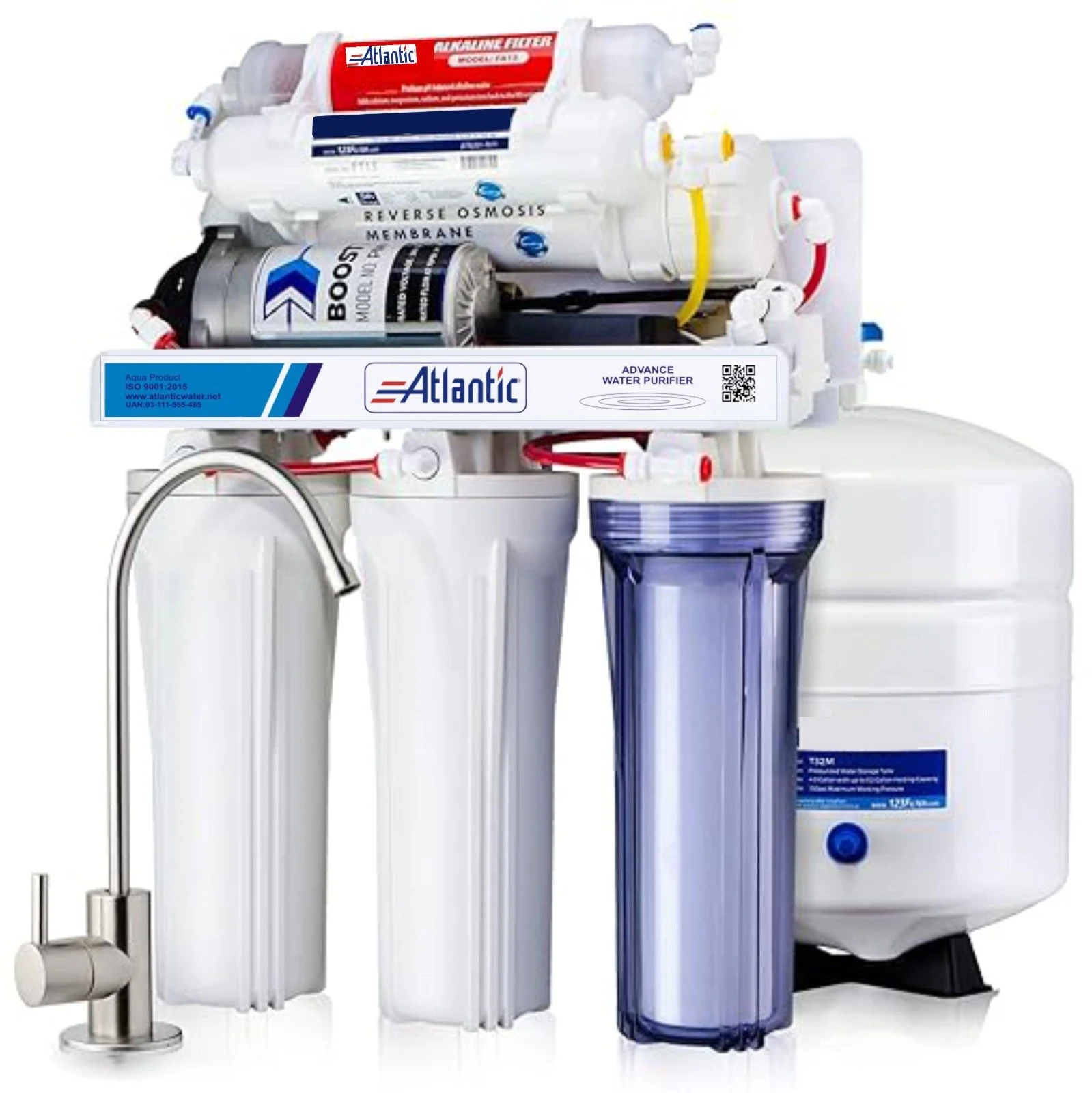
Buying an RO plant for a factory, a water delivery business, or a large facility isn’t really the same decision as buying one for a house. Bigger capacity, continuous running hours, higher stakes if something breaks. Before comparing quotes from any RO plant manufacturer, supplier, or dealer in Pakistan, it’s worth knowing what actually separates a plant that runs reliably for years from one that becomes a maintenance headache within eighteen months. That’s the kind of question we get asked constantly at Atlantic Water, so here’s the short version.
How a Commercial RO Plant Actually Treats Water
Raw water doesn’t go straight into the membrane. That’s the part people sometimes skip past. A properly built reverse osmosis water treatment plant runs water through several stages first, and each one protects the stage after it.
Sand and carbon filters come first, catching sediment, suspended particles, and chlorine before they reach anything expensive. Micron cartridges follow, filtering finer particles the earlier stages missed. Only after that does water reach the RO membrane itself, where the actual TDS reduction happens, dissolved salts, heavy metals, and impurities getting rejected under pressure. Optional post-filtration stages can add minerals back in for taste, which matters if the water’s being sold rather than just used internally.
Skip or undersize any of those early stages, and the membrane takes the damage instead. That’s usually where a cheap quote quietly costs more later. For smaller setups or offices, a triple stage filter installed upstream works well as a pre-filter, catching sediment and chlorine before water ever reaches the RO stage.
Sizing: The Number Everyone Gets Wrong First
Capacity’s measured in LPH, liters per hour, and buyers tend to either undersize (trying to save money upfront) or oversize (paying for capacity that never gets used). Atlantic’s small mineral water plant setup comes in 250, 500, 750, and 1000 LPH configurations, which covers most local water shops, offices, and home-delivery businesses, but larger industrial needs step up well beyond that range depending on daily output requirements.
Worth working backwards from actual demand rather than guessing. How many liters do you realistically need per day, how many hours will the plant actually run, and how much room for growth over the next couple of years does the business need? A plant sized only for today’s demand often needs replacing sooner than expected.
Materials Matter More at Scale
Stainless steel construction, SS304 or SS316 grade specifically, is standard for the skid and piping on any serious commercial or industrial plant. Cheaper alternatives corrode faster, especially with higher-salinity source water, and replacing corroded piping on a plant already in operation means downtime nobody planned for.
Manufacturer, Supplier, or Dealer: What’s the Difference?
These terms get used interchangeably in Pakistan’s RO market, but they don’t mean the same thing. A manufacturer builds or assembles the plant itself, which usually means better control over specifications and direct technical support. A supplier sources plants or components from elsewhere and resells them. A dealer typically sells someone else’s brand without much involvement in the actual engineering.
None of these is automatically bad, but it’s worth asking directly which one you’re actually dealing with, since it affects who’s responsible when something needs adjusting after installation. If you want to see what a full RO systems range looks like before you start comparing, that’s a decent reference point for what to expect on specs and configurations.
Maintenance: What the Routine Actually Looks Like
A lot of buyers focus so hard on upfront price that maintenance barely gets a thought until something starts underperforming. A basic routine on a commercial plant involves backwashing the sand and carbon filters regularly, replacing micron cartridges every one to three months, and monitoring membrane performance over time rather than waiting for output to visibly drop.
That last part matters. Membrane performance drops gradually, not suddenly, and catching a decline early is a lot cheaper than replacing a membrane that’s been running degraded for months. Systems built for straightforward, largely DIY maintenance on basic tasks cost less to run long-term than ones that need a technician for every routine check.
Installation and Timeline
Space requirements scale with capacity. A plant in the higher-LPH range needs enough room for the filtration equipment, raw water storage, and clear access for maintenance work. Orders through Atlantic typically get processed within 24 to 48 hours after confirmation, though actual installation timing depends on the plant’s size and site conditions. If you’re not sure what your site can actually accommodate, get in touch with your space and water source details before committing to a capacity, it’s much easier to adjust a plan on paper than after equipment arrives.
Who Actually Needs a Commercial or Industrial Plant
Local water shops and home-delivery operations, offices needing reliable drinking water for staff, factories with process water requirements, hospitals, schools, and larger institutions. Each has different capacity and quality requirements, which is exactly why a one-size quote doesn’t tend to hold up once the real details come out. Sizing, source water quality, and how the plant will actually be used all shape what makes sense.


