





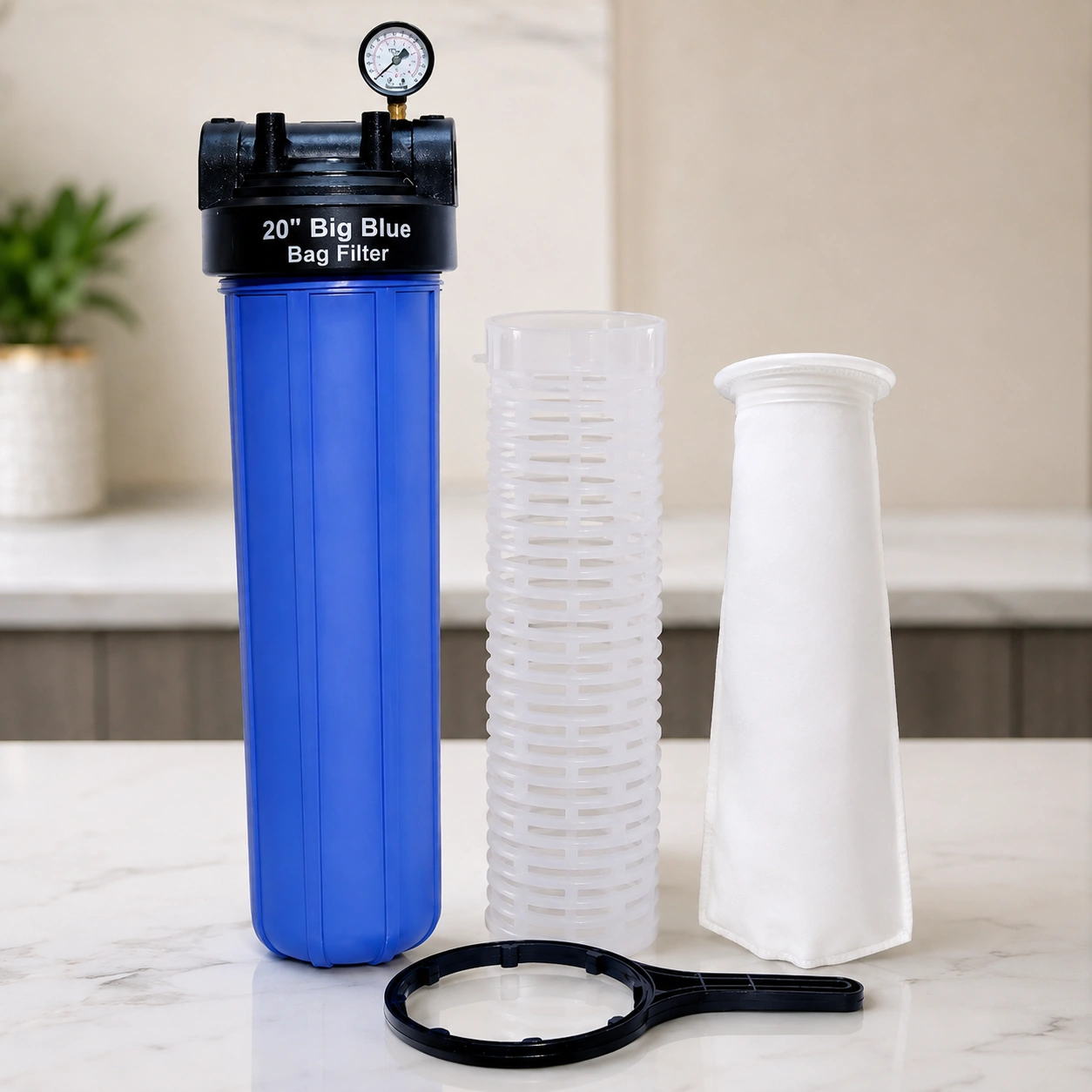
“Water filtration system” covers a lot of ground, sediment filters, carbon filters, UV treatment, RO membranes, and most homes or businesses in Pakistan actually need some combination rather than just one piece of equipment. Worth understanding what each technology actually does before comparing suppliers or prices, since the right setup depends entirely on what’s in your water to begin with.
The Core Technologies, Briefly
Sediment filtration catches physical particles first, sand, silt, rust, anything visible or semi-visible suspended in the water. This is usually the first stage in any proper system, since skipping it wears out finer filtration downstream a lot faster than it should.
Carbon filtration handles chlorine, taste, and odor, using activated carbon to absorb chemical compounds that sediment filters can’t touch. Common in both standalone units and as a stage within a larger system.
UV treatment targets bacteria and microorganisms using ultraviolet light rather than chemicals or membranes, useful specifically where biological contamination is a concern rather than mineral content.
RO (reverse osmosis) is the only one of these that meaningfully reduces TDS (total dissolved solids), dissolved salts and heavy metals that the others simply pass through. If your water’s genuinely hard or high in mineral content, RO isn’t optional, it’s really the only technology equipped to handle it.
Most properly built systems layer a few of these together rather than relying on just one. Atlantic Water’s triple stage filter is a good example of that layering done at a household scale, sediment, carbon, and a nano silver antibacterial stage combined into one unit.
Residential vs. Commercial vs. Industrial
Residential systems handle household needs, drinking water at the tap or whole-house treatment depending on setup. Lower capacity, simpler installation, generally sized around daily household consumption rather than continuous output.
Commercial systems serve businesses, offices, shops, small water delivery operations, and need higher capacity than a household unit without stepping up to full industrial scale. A mineral water plant setup typically fits here, scalable enough to grow alongside demand rather than requiring a full system replacement once a business expands.
Industrial systems operate at a different level entirely, factories, large institutions, continuous high-volume purified water as an operational requirement rather than a convenience. These need more robust membranes, larger raw water storage, and a higher level of ongoing maintenance to keep running at full capacity without unplanned downtime.
What Actually Drives the Price
Capacity’s the biggest factor, measured in LPH (liters per hour) for most commercial and industrial setups. Raw water quality matters just as much though, water with high salinity or heavy TDS needs more robust membranes and additional pre-treatment stages, which pushes cost up compared to a system treating relatively clean municipal supply.
Material choice affects both upfront cost and long-term value. Stainless steel construction, SS304 or SS316 grade specifically, costs more initially but resists corrosion significantly longer, which matters more over a system’s actual lifespan than the sticker price alone suggests.
Installation Considerations
Installation requirements scale with system size. A small household unit needs minimal dedicated space, often fitting under a kitchen sink with no real disruption to daily use. Larger commercial or industrial RO systems, on the other hand, need proper space planning, raw water storage, and clearance for ongoing maintenance access.
Local water conditions also affect installation more than people expect going in. Water quality varies significantly by region across Pakistan, so a system properly sized for one city’s water might need adjustment for another’s higher salinity or mineral content.
Choosing a Manufacturer or Supplier
A water filtration system is only as good as the maintenance support behind it. Membranes need periodic cleaning and eventual replacement regardless of how well a system was installed initially, and a supplier who disappears after installation leaves you stuck sourcing parts and support elsewhere down the line. Worth asking upfront about ongoing maintenance availability, not just the initial installation, before committing to any particular manufacturer.
Getting the Right System for Your Situation
The right setup really comes down to three things: your actual water source and its quality, how much capacity you need, and whether this is a household, commercial, or industrial application. Get in touch with those specifics, and it’s a lot easier to recommend the right combination of filtration technology than trying to guess from “water filtration system” as a generic search term alone.


