





“Best water filter” isn’t really one product, it depends entirely on what’s actually in your water and where in the house you’re trying to fix it. A filter that handles chlorine taste from a fridge dispenser does nothing for sand coming through a mainline connection. Worth breaking this down by type before picking anything, especially with how much water quality varies city to city across Pakistan.
Whole House and Under Sink Filters
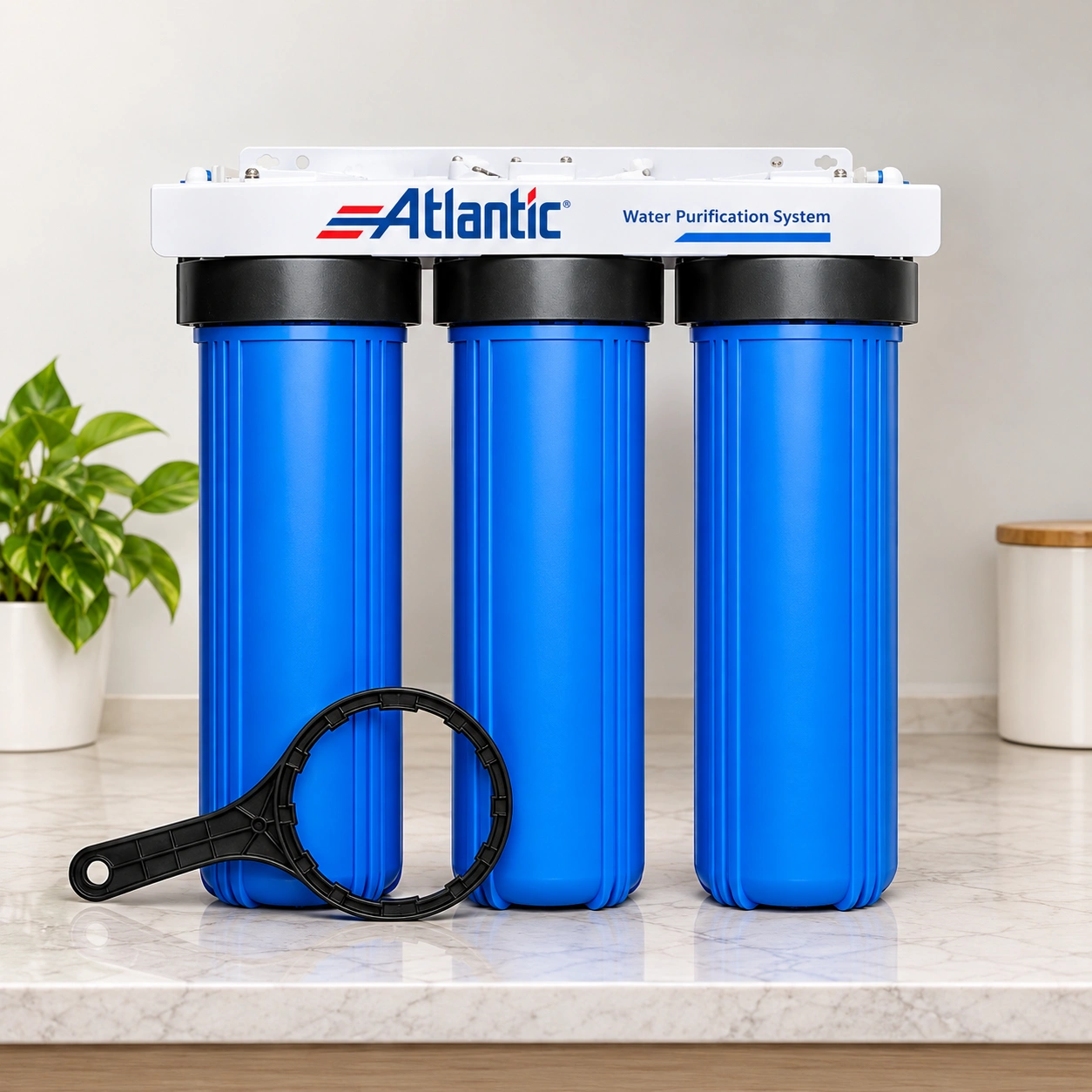
This is usually where people should actually start, filtering water at the point it enters the home rather than just at one tap. The Atlantic Triple Stage Water Filter covers this category well, sediment removal first, then activated carbon for chlorine and odor, then a nano silver stage for bacterial protection. No electricity needed either, which matters a lot in areas where power isn’t fully reliable.
For homes specifically searching best under sink water filter, this same triple-stage approach works fine installed under a kitchen sink rather than whole-house, smaller footprint, same filtration logic.
Sediment Filters for Well or Mainline Water
If your water’s coming from a borewell or a mainline connection carrying visible sand, silt, or rust, a dedicated sediment filter needs to come before anything else. A large-capacity sand filter, mounted on the mainline itself, catches this before it ever reaches your taps or damages downstream equipment like an RO membrane. Skipping this stage is one of the more common mistakes people make, since fine particulate wears out finer filtration stages a lot faster than it should.
RO Systems for Drinking Water
Reverse osmosis handles what sediment and carbon filters can’t, dissolved salts, heavy metals, high TDS water that’s common in a lot of Pakistani cities depending on the local supply. This is really the only filtration type that actually reduces TDS meaningfully rather than just clarifying water or removing taste and odor. Worth checking your local water’s TDS level before assuming a basic filter’s enough, since areas with genuinely hard, high-mineral water need RO specifically, not just a carbon filter.
For anyone running a shop, office, or small water delivery business rather than a single household, an RO system sized for commercial output makes more sense than a household unit stretched past its actual capacity.
Refrigerator, Faucet, and Dispenser Filters
These handle a narrower job, mostly chlorine taste and odor at a single point of use, a fridge’s built-in dispenser, a faucet-mounted cartridge, a countertop pitcher-style unit. Fine for taste improvement on already-decent municipal water, but they’re not built to handle high sediment, high TDS, or bacterial concerns the way a proper multi-stage or RO system is. If your water’s genuinely poor quality rather than just slightly off-tasting, these are a band-aid, not a real fix.
Shower Filters for Hard Water
Hard water through a shower head causes its own separate issues, dry skin, dull hair, mineral buildup on fixtures over time. A shower filter specifically targets chlorine and some mineral content at that one point, but it won’t address hardness at a whole-house level the way a proper softening or filtration setup upstream would. Worth treating as a targeted fix rather than a full solution if hard water’s a broader issue throughout the house.
Filtered Water Bottles
Portable, useful for travel or situations without access to filtered tap water, but limited in what they actually remove, mostly basic taste and odor rather than anything close to what a real filtration system handles. Fine as a backup, not a replacement for fixing water quality at the source.
Picking Based on What’s Actually in Your Water
Realistically, the right filter depends on a few honest questions: is your water visibly sandy or cloudy (sediment filter first), does it taste or smell off but look clear (carbon-based filtration), or does it come back with high TDS on a water test (RO is really the only option that handles that properly)? Most homes in Pakistan end up needing some combination rather than just one single filter solving everything.
Reach out with your city and water source, mainline, borewell, or municipal supply, and it’s a lot easier to recommend the right setup once that’s actually known rather than guessing from “best water filter” alone.


