





Ask five different shopkeepers about the price of a water filter for home in Pakistan and you’ll probably get five different numbers. One will quote you 3,000 rupees for a jug filter, another will push a 45,000 rupee RO system, and a third will try to sell you a whole filter plant “just to be safe.” None of them are lying exactly — the water filter price in Pakistan for home use really does span that wide. The trick is figuring out which one your house actually needs, instead of paying for capacity you’ll never use.
That’s what this guide is for. No sales pitch, just the actual price ranges across every water filter system for home in Pakistan, the technology behind them, and how to match a filter to your water rather than your budget alone.
So What Does a Water Filter Actually Cost Here?
Roughly speaking, here’s where a small water filter for home price in Pakistan versus a full setup lands right now:
- A small water filter for home price in Pakistan (jug or tap-mounted): PKR 1,500 to 5,000
- A tap water filter for home with a countertop carbon stage: PKR 5,000 to 12,000
- An aqua water filter for home price in Pakistan (basic RO unit): PKR 12,000 to 25,000
- An RO water filter for home price in Pakistan (standard system): PKR 20,000 to 45,000
- A water filter machine for home price in Pakistan (dispenser-style with hot/cold): PKR 15,000 to 40,000
- A water filter plant for home price in Pakistan (whole-house setup): PKR 40,000 and up, sometimes past 150,000 for larger borewell setups
None of these numbers include installation, by the way — we’ll get to that later, because it catches a lot of buyers off guard.
Why Bother Filtering at All?
If you’re in Karachi, parts of Lahore, or basically anywhere pulling water from a borewell, you already know the water doesn’t always taste right — sometimes it’s salty, sometimes cloudy, sometimes it just leaves a film on glasses after they dry. That’s usually high TDS (total dissolved solids) or contamination from old municipal pipes. It’s not paranoia to want a filter; in a lot of neighborhoods it’s just common sense at this point.
The Types of Water Filters for Home You’ll Actually Find in the Market
People throw around terms like “water filter,” “RO system,” and “filter plant” as if they’re interchangeable, but they’re not. Here’s the real breakdown of the types of water filters for home available locally.
A tap water filter for home is the entry point — cheap, carbon-based, and decent at fixing smell and taste. What it won’t do is touch dissolved salts or bacteria in any serious way. Fine if your municipal water is already reasonably clean and you just want the chlorine taste gone.
Countertop and under-sink filters step things up slightly with a carbon block and usually a sediment stage too. Still not built for heavy mineral content, but a solid upgrade from a jug. Our triple stage water filters are great examples of this category, combining sediment, carbon, and UV purification in one system.
An aqua water filter for home, which is really just the local term for RO-based systems, is where most Pakistani households end up landing. Reverse osmosis pushes water through a membrane fine enough to strip out close to 99% of dissolved salts, bacteria, and heavy metals. If your water comes from anywhere near a borewell, this is probably your starting point rather than an upgrade.
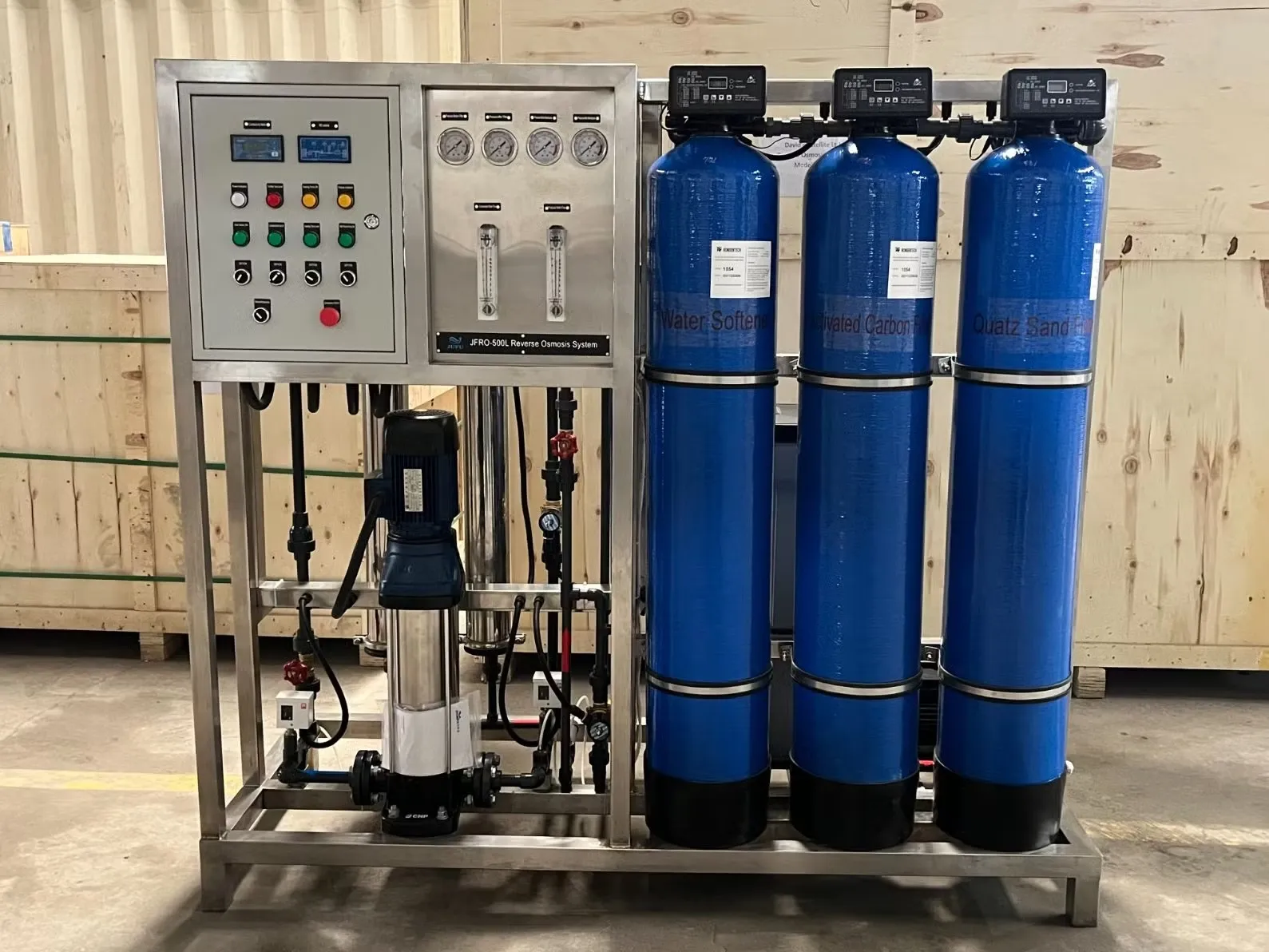
A water filter plant for home is the bigger cousin of an RO system — multiple stages, sometimes UV sterilization added on, bigger storage tanks, meant for villas or households with a lot of daily usage. Think of it as an RO system that’s been scaled up for a whole house rather than a kitchen counter. For small-scale needs, consider a small mineral water plant which offers reliable capacity.
A water filter machine for home, the dispenser-style unit with hot and cold taps, is more about convenience than raw filtration power, though most now include an RO stage internally too.
What Actually Decides Which One You Need
Three things, really. First, what’s your water quality right now — do you know your TDS number, or are you guessing? Second, how many people are drinking from this filter daily? Third, and this is the one people forget, what’s the ongoing cost going to look like — not just what you pay on day one.
That last point matters more than people expect. RO membranes generally need swapping out every 12 to 18 months, and the carbon/sediment filters before them every 3 to 6 months. A filter that looked cheap at checkout can quietly cost more over two years if its replacement cartridges are hard to find or overpriced. Before you buy anything, ask what the replacement filters cost and whether they’re actually stocked locally — not just “available on order.”
Small Filters, Small Households
If you’re living alone, sharing a flat, or just need clean drinking water without ripping into your plumbing, a small water filter for home price in Pakistan usually runs somewhere between 1,500 and 12,000 rupees depending on whether it’s a basic jug or a compact carbon unit under the sink. No electricity needed, no drainage line, easy enough to install yourself in twenty minutes. Good option for renters who don’t want to leave equipment behind when they move.
RO Systems: Where Most People End Up
An RO water filter for home price in Pakistan typically starts around 15,000 rupees for a basic local setup and can climb past 45,000 for the premium end with extra stages — a mineralizer, UV add-on, bigger tank. For most families of four to six people, something in the 20,000 to 30,000 range does the job well without paying for commercial-level output nobody’s using. This is usually what people mean when they ask for the best water filter system for home in Pakistan — not the biggest unit, but the one sized right for the household.
What actually pushes the price around: how many filtration stages it has, tank size, whether there’s a mineralizer or UV lamp thrown in, and — often overlooked — how good the brand’s after-sales service actually is where you live.
When You Need a Full Filter Plant
For bigger houses or anywhere running on borewell water full-time, a home water filter plant price in Pakistan typically runs 40,000 to well over 150,000 rupees, scaling with output capacity and how many treatment stages it runs. These usually need a technician for installation, a dedicated spot in the house, and periodic servicing — get that servicing cost quoted upfront, because it adds up over a few years more than people expect.
About That Aquafina Filter Everyone Asks About
A lot of people specifically search for the Aquafina home water filter price in Pakistan, since it’s one of the more recognizable names in the local market. Pricing generally sits between 15,000 and 35,000 rupees depending on the model, putting it squarely in mid-range territory — decent, widely serviced, spare parts not too hard to find in most cities. Worth confirming current pricing with an authorized dealer directly though, since import costs and currency shifts move these numbers around more often than you’d think.
Does Your City Change What You Should Buy?
A bit, yes. If you’re specifically after a water filter for home in Islamabad, the municipal supply there is generally in better shape, so a mid-tier RO unit — or sometimes even a solid carbon filter — covers most households fine. Search for the best water filter for home in Lahore, though, and you’ll notice most local sellers push RO first — groundwater here tends to run higher TDS, so it’s the safer call rather than a luxury upgrade. Karachi is its own case, with a lot of households relying on tanker water or brackish supply, which really points toward a full RO system with a decent-sized tank rather than anything smaller.
If you don’t know your water’s TDS level, most dealers will test it for free before quoting you anything — it’s worth doing before you buy rather than guessing and hoping. Check our contact page to reach out for a free water quality assessment.
What People Actually Mean by “Best”
Search for the best water filter and Google will show you a dozen different “top 10” lists, most of them not agreeing with each other. That’s because “best” depends entirely on context. Someone typing best water filter in Pakistan on a laptop at home usually means an RO system for regular household use. Someone typing best home water filter is often comparing dispenser-style units for a kitchen counter. And best home water filter system usually points toward the full setup — sediment, carbon, membrane, sometimes UV — installed permanently under the sink.
If your search was more specific — best home water filter in Pakistan, best water filter for home in Pakistan, or best water filter for home price in Pakistan — the honest answer doesn’t change much: it’s a mid-range RO system from a brand with decent local service coverage, sized to your household and your water’s TDS level, not the flashiest unit on the shelf.
A Rough Way to Decide
If your water just tastes or smells slightly off but TDS is normal, a carbon countertop filter covers it. If TDS is high — above 500 ppm — or you’re on a borewell, go RO. Large household, six or more people, or a villa? A filter plant with a bigger tank makes more sense long-term. And if you’re renting or just testing the waters (no pun intended) on a tight budget, a small jug filter is a perfectly reasonable starting point.
Installation Costs Nobody Mentions Upfront
This is the part that surprises people. The quoted price of the filter itself is rarely the full amount you end up paying.
Plumbing connections, if your kitchen doesn’t already have a compatible tap, run about 1,000 to 3,000 rupees. RO and UV units need a power point nearby, and running a new one can cost 500 to 2,000. Some units need a wall bracket or stand, another 500 to 1,500. And a lot of dealers offer annual maintenance contracts — filter swaps plus a technician visit — for roughly 3,000 to 8,000 a year, which honestly is worth it if you don’t want to be the one tracking replacement schedules.
Ask about all of this before comparing quotes. Two sellers offering what looks like the “same” RO system can end up wildly different once installation and yearly servicing are factored in.
Local Brands or Imported — Does It Matter?
Locally assembled units, built using imported membranes and housings but put together here, tend to run 20 to 35% cheaper and have wider service coverage since parts are easier to find. For most households, especially outside the big three cities, this is the practical choice.
Fully imported brands usually come with longer warranties and more consistent build quality, but if something breaks, parts can take longer to arrive and cost more once they do. These tend to make more sense in Lahore, Karachi, or Islamabad where authorized service centers actually exist nearby.
Neither is objectively “better” — it really comes down to how fast you can get support if something goes wrong, which matters a lot more in year two than it does on day one.
Before You Actually Buy Anything
Run through this quickly with whoever’s selling you the filter:
Has anyone actually tested your water’s TDS, or is the recommendation just a guess? Does the quoted price include installation, or is that separate? How easy is it to find replacement filters or membranes in your city specifically? What does the warranty cover — just the filter stages, or the pump and motor too? And is there someone local who services it, or does it need to be shipped somewhere if it breaks?
Answering these before you commit will save you more money over time than chasing the lowest sticker price ever will. Browse Atlantic Water’s homepage to see all available solutions and current offers.
Common Questions People Ask
What’s a fair price for a decent home water filter in Pakistan?
Somewhere around 20,000 to 35,000 rupees for a mid-range RO system, installation included, covers most average households comfortably.
Which type is genuinely the best for most Pakistani homes?
For households dealing with high TDS or borewell water — which is a lot of the country — a 5 or 7-stage RO system tends to be the sweet spot between cost, effectiveness, and how much upkeep it demands.
Do I actually need a full filter plant, or is that overkill?
Mostly overkill unless you’re in a large household, running a villa, or relying on borewell water full-time. Smaller homes with reasonable municipal supply are usually fine with a compact RO or carbon unit.
How often do the filters need changing?
Sediment and carbon stages, every 3 to 6 months. RO membranes, roughly every 12 to 18 months — though it really depends on how hard your water is and how much you’re running through it.
Does spending more always mean better filtration?
Not really. A lot of the price difference comes down to tank size, number of stages, and brand reputation — not necessarily purification quality. A mid-range unit from a seller with solid local support often outperforms an expensive one with nobody to call when it breaks down.
Bottom Line
There isn’t one single right answer to what a water filter system for home should cost in Pakistan — it depends entirely on your water source, how many people are using it, and how much maintenance you’re willing to stay on top of. As a rough rule: renters and single users are fine with a small jug or countertop filter, average city families do well with a mid-range RO or aqua filter, and larger households or borewell-dependent homes should lean toward a proper water filter plant for home.
Get your water tested first, get at least two or three quotes that include both upfront and replacement costs, and you’ll end up with something that actually fits your house — instead of whatever the last salesman convinced you was necessary.


